
Legal insight Car Accidents
Can Your Car's Data Be Used Against You in an Injury Claim?
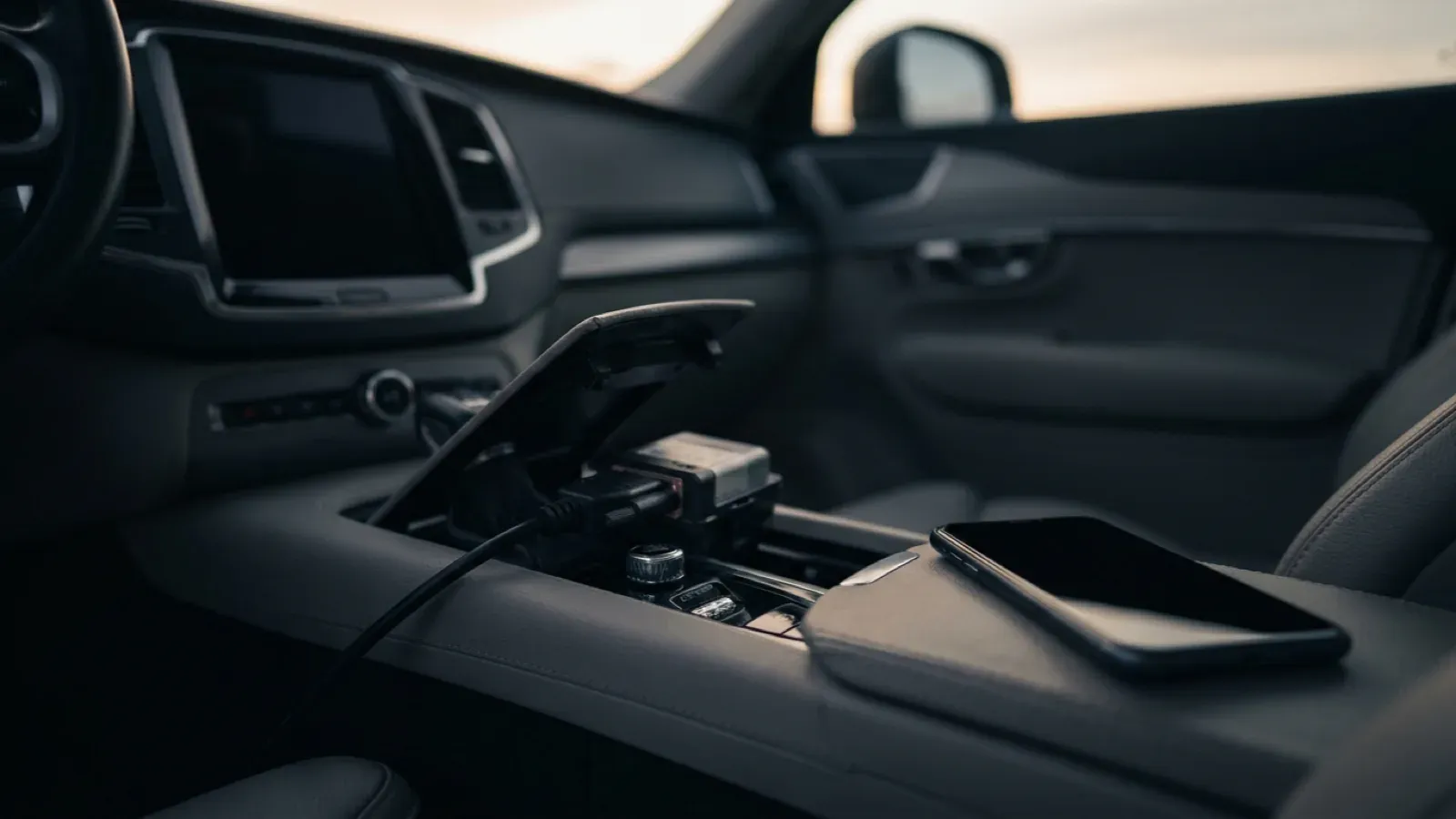
Your car’s black box data belongs to you. An insurer, the other driver’s lawyer or anyone else needs your consent or a court order to download it. Driving data that your car’s connected services or phone apps send elsewhere is a different matter: automakers and app companies have been accused of selling it to insurers. The ownership rule that protects your black box data also lets you get the at-fault driver’s speed and braking record through a court.
Two kinds of car data: the black box and the telematics file
Event data recorder (EDR) data is stored in the vehicle. Telematics data is sent to automakers or app companies.
The EDR is what most people mean by vehicle black box data. NHTSA describes it as a device that records “for a brief period of time (seconds, not minutes) before, during and after a crash,” and its definition excludes audio and video recording.
Federal rules don’t require cars to have one. Part 563 is an “if equipped” standard. But NHTSA estimates that “99.5 percent of model year 2021 passenger cars and other vehicles” with a gross vehicle weight rating of 8,500 pounds or less have Part 563-compliant EDRs. If you drive a recent car, assume it has one.
Telematics data builds up differently. GM’s OnStar Smart Driver program tracked driving habits, including speeding, braking and acceleration. Arity’s software, embedded in apps such as Life360, collected driving data from phones. That data leaves the car and ends up with a company that can sell it.
Different rules govern each kind, so you protect them in different ways.
What car black box data is recorded, and for how long?
Under current federal rules, an EDR must capture seven data elements “for a duration of 5 seconds prior to the crash (speed, engine throttle, service brake, engine RPM, ABS activity, stability control, and steering input).”
A December 2024 rule raised the required window to 20 seconds at 10 samples per second. NHTSA’s reasoning: with the longer window, “actions such as running a stop sign or red light could be captured in full and included in crash reconstruction.”
That window hasn’t started yet. A May 18, 2026 final rule delayed it. The 20-second requirement now applies to 25 percent of vehicles from September 1, 2028, rises to 50 and 75 percent, and reaches 100 percent on and after September 1, 2031.
Some law firm pages say a black box records “about 20 seconds.” That is not the federal minimum for cars on the road today. If you’re counting on the other driver’s EDR to show what happened at an intersection, the required record covers 5 seconds before impact.
Who owns your EDR data, and can an insurer get it?
The vehicle’s owner does. Under the Driver Privacy Act of 2015, Sec. 24302(a), the data “is the property of the owner, or, in the case of a leased vehicle, the lessee.”
Anyone else, including an insurance company, can access it only in limited cases. Two matter most in a crash claim:
- The owner or lessee gives written, electronic or recorded audio consent.
- “A court or other judicial or administrative authority having jurisdiction… authorizes the retrieval of the data.”
As of 2021, at least 17 states, Delaware among them, had their own EDR privacy statutes. These generally allow a download only with the owner’s or policyholder’s consent, with exceptions such as a court order.
Consent is where people give their protection away. A recorded statement, a claim form or a repair authorization can include language that permits a download. Read anything an adjuster sends you, and don’t agree to vehicle data access until you know who gets the data and why.
Do insurance companies get your driving data another way?
Yes. Connected-car and app data has allegedly reached insurers without passing through the EDR rules at all.
State attorneys general alleged that GM collected Driver Data from “nearly 10.3 million drivers enrolled in Smart Driver between 2016 and 2024.” It covered trip timing and frequency, speeding, sudden acceleration and hard braking. It was allegedly sold for insurance-related uses, and Connecticut’s AG reported that some drivers saw their premiums go up.
Opting out did not always work. The AGs alleged that OnStar’s app wrongly showed more than 370,000 consumers as not participating. GM later removed them, “but brokers and insurers retained previously disclosed information.”
Then there are phones. On January 13, 2025, Texas sued Allstate and Arity, alleging they collected driving data through software in apps such as Life360 from “over 45 million consumers nationwide.” The suit also alleges that when a consumer asked for a quote or renewed coverage, insurers used that data “to justify increasing their car insurance premium.”
What the GM settlement and FTC order mean for Delaware drivers
Delaware drivers get new protections from GM going forward, but no payment.
On October 29, 2026, GM agreed to pay $220 million to settle the Smart Driver claims brought by AGs from 35 states and the District of Columbia. WGMD reported that “Delaware will receive about $4.7 million as part of the settlement involving 36 states.”
That money goes to the state. “The settlement does not provide restitution to consumers. GM did not admit to any wrongdoing.” GM must now get affirmative express consent before it collects or discloses driving behavior or precise geolocation data.
The FTC acted first. On January 14, 2026, it finalized an order imposing “a five-year ban on GM disclosing consumers’ geolocation and driver behavior data to consumer reporting agencies.” For the order’s 20-year life, GM must get affirmative express consent and must let consumers request a copy of their data and its deletion.
Smart Driver was discontinued in 2024. Related multidistrict litigation is still pending in the Northern District of Georgia.
If you drove a GM vehicle with OnStar between 2016 and 2024, use the FTC order’s copy and deletion rights to find out what GM holds about you.
Can your own driving data be used against you in a lawsuit?
Yes, through the same court process you would use to get the other driver’s data. The Driver Privacy Act lets a court authorize retrieval of EDR data from your car as much as from theirs. If fault is disputed, the defense can ask for your speed and braking record.
That record isn’t automatically bad for you. It shows what your car actually did, so if you were braking and under the limit, it helps. On neighborhood streets, check the numbers against Delaware’s 20 mph residential speed limit before you assume either car was speeding.
Telematics is a separate risk. GM and Allstate/Arity both allegedly sold driving data for insurance uses, and some brokers and insurers kept data even after drivers were marked as not participating.
What to do with your car data after a crash:
- Don’t sign broad consent forms for vehicle data from any insurer, including your own, without understanding them.
- Keep your car off the road until you decide whether its EDR data matters, because driving it again can overwrite the data.
- Check which connected services you’ve enrolled in, such as OnStar, and what you agreed to share.
- Open the privacy settings in Life360 and any other family-location or driving-score app on your phone, and review what driving data it collects.
- If you had a GM vehicle, request a copy of your data under the FTC order.
How to get black box data from the other driver’s car after a crash
You need that driver’s consent or a court order, because the Driver Privacy Act makes EDR data the property of the vehicle’s owner.
The at-fault driver’s EDR can show their speed, braking and steering input in the 5 seconds before impact. If they claim they were braking or holding their lane, that record can show whether they were.
Expect resistance. One trial lawyer notes that the defense “may refuse to voluntarily provide EDR data,” and that “a court order or subpoena may be required.”
Move fast. A preservation letter should go out quickly, because driving the vehicle again can overwrite the data. No reliable published figure says how long the data survives, so treat every day the car stays in use as a risk.
A preservation letter should:
- Go to the other driver and their insurer
- Identify the vehicle involved in the crash
- Ask that it not be driven, repaired, sold or scrapped until the EDR data is downloaded
Downloading doesn’t damage the data. According to NHTSA, “the original data set remains intact and unchanged in the memory banks of the EDR.”
For another case of how digital evidence can make or break an award, or for more on building a claim, browse our injury claim guide library.
If the other driver’s car may still be on the road, tell us what happened in your crash so a preservation letter can go out while the record still exists.